
Presented with the Institute of Buddhist Studies
🗓️ January 20, 2027 @ 4:00pm PST / 7:00pm EST
📍Online
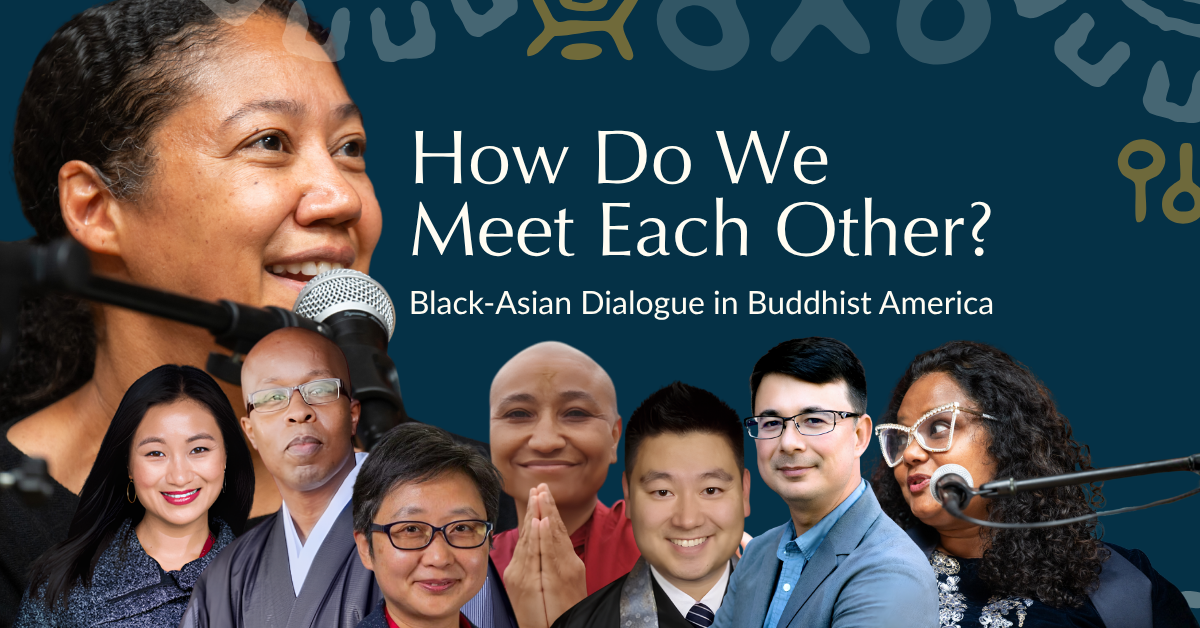
How Do We Meet Each Other?
A Series of Black-Asian Dialogues in Buddhist America
Buddhist Practices for Challenging Domination: A Conversation with Thenmozhi Soundararajan
Thenmozhi Soundararajan is a Dalit American artist, community organizer, and founder/Executive Director of Equality Labs. As Equality Labs’ Executive Director, she works to dismantle systems of oppression—specifically caste apartheid, gender-based violence, Islamaphobia, and religious intolerance. Thenmozhi has mobilized thousands of South Asian Americans across faiths, castes, and generations towards not only ending violence against South Asian minority communities, but also to creating pathways for visionary futures rooted in collective care and safety for all marginalized communities.
This conversation series brings Black and Asian-American Buddhist scholars and practitioners together for honest dialogue about what it means to practice Buddhism in America today. These conversation partners aim to create bridges and ask nuanced questions — about ancestral practices and culture, about appropriation and erasure, and about what it means to evolve the Buddhist tradition to meet the current moment.
Each conversation is also a practice in itself: honoring the cultural roots each person brings, building real political solidarity, and growing a Buddhist community rooted in both care and accountability.
Hosted by Dr. Rima Vesely-Flad, IBS Research Fellow
Dr. Rima Vesely-Flad is a Research Fellow at the Institute of Buddhist Studies and the Founding Director of the Initiative for Black Buddhist Studies. She is the author of three books and several academic articles on Buddhism and Black culture, as well as religious approaches to systemic violence.
This series is generously funded by the Henry J. Luce Foundation.